
Coronary angiography
A diagnostic procedure that lets cardiologists see inside the heart's arteries and check for narrowing or blockage.
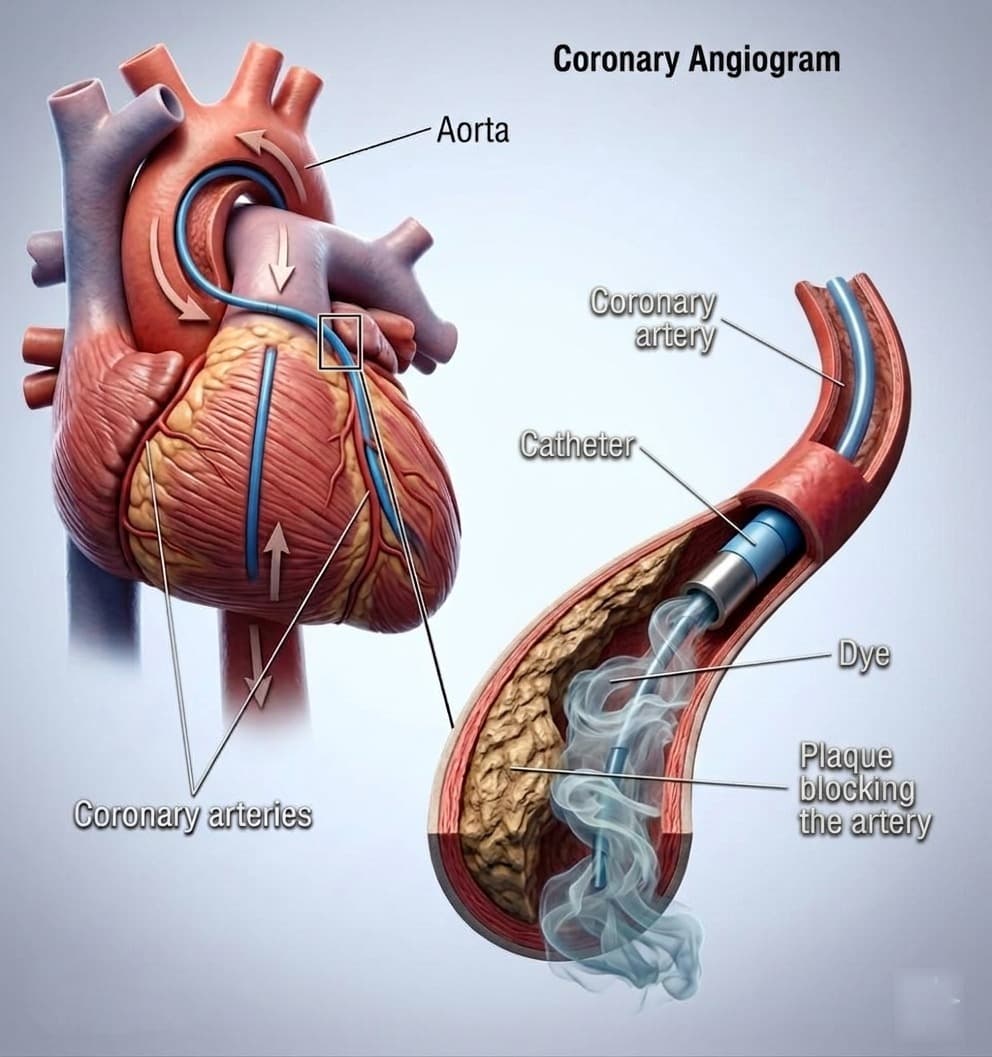
What is coronary angiography?
Coronary angiography is a diagnostic procedure used to examine the coronary arteries — the blood vessels that supply the heart muscle. Using a contrast dye together with X-ray imaging, it shows whether any of these arteries are narrowed or blocked. It is considered one of the most accurate ways to diagnose coronary artery disease.
Why it is performed
It is usually performed when a doctor suspects coronary artery disease, to find the exact location and severity of any narrowing. Common reasons include:
- ongoing chest pain or pressure (angina)
- suspected coronary artery disease
- an abnormal stress test or ECG
- shortness of breath linked to the heart
- a previous heart attack
- planning for stenting or bypass surgery
The findings help the doctor choose the most appropriate treatment — medication, coronary stenting, or bypass surgery.
How artery narrowing develops
Narrowing usually develops through atherosclerosis, in which fatty deposits called plaques build up on the inner walls of the arteries and gradually reduce the space for blood to flow. As blood flow falls, the heart muscle receives less oxygen, which can cause chest pain, tiredness or breathlessness. In severe cases, a complete blockage can cause a heart attack.
Preparing for the procedure
Beforehand, you will usually have some tests such as blood work, an ECG and sometimes an echocardiogram. Tell your doctor about any medicines you take and any allergies — especially to iodine or contrast dye. You may be asked not to eat or drink for a few hours before the procedure.
How it is performed
Angiography is carried out in a specialised catheterisation laboratory with X-ray equipment, and usually takes about 20 to 40 minutes. You lie on a table under local anaesthetic while a small puncture is made in an artery, usually at the wrist or the groin. A thin catheter is guided to the heart under X-ray, and a contrast dye is injected so the arteries show up clearly on the images.
What you feel during the procedure
The procedure is generally well tolerated and does not require general anaesthesia — you stay awake throughout. Because the puncture site is numbed, it is usually painless. Some people feel a brief sensation of warmth when the dye is injected, lasting only a few seconds. Staff monitor your heart rate and blood pressure the whole time.
After the procedure
The catheter is removed and the puncture site is closed with a compression device or a pressure bandage. You are observed for a few hours to check for any problems. If the wrist was used, recovery is usually quicker and you may go home the same day; if the groin was used, you may need to lie flat for several hours.
Possible results
- normal coronary arteries, without significant narrowing
- partial narrowing of one or more arteries
- a significant blockage that needs treatment
If a significant narrowing is found, the doctor may recommend coronary stenting — sometimes during the same procedure.
Recovery and aftercare
Most people recover quickly. It usually helps to drink plenty of fluids to flush the contrast dye out of the body, to avoid heavy activity for a few days, and to watch the puncture site for swelling, pain or bleeding. Follow your doctor's instructions about medicines, and seek medical attention if you develop chest pain, dizziness or severe discomfort.