
Coronary stenting
A minimally invasive procedure that opens a narrowed coronary artery with a small mesh stent to restore normal blood flow to the heart.
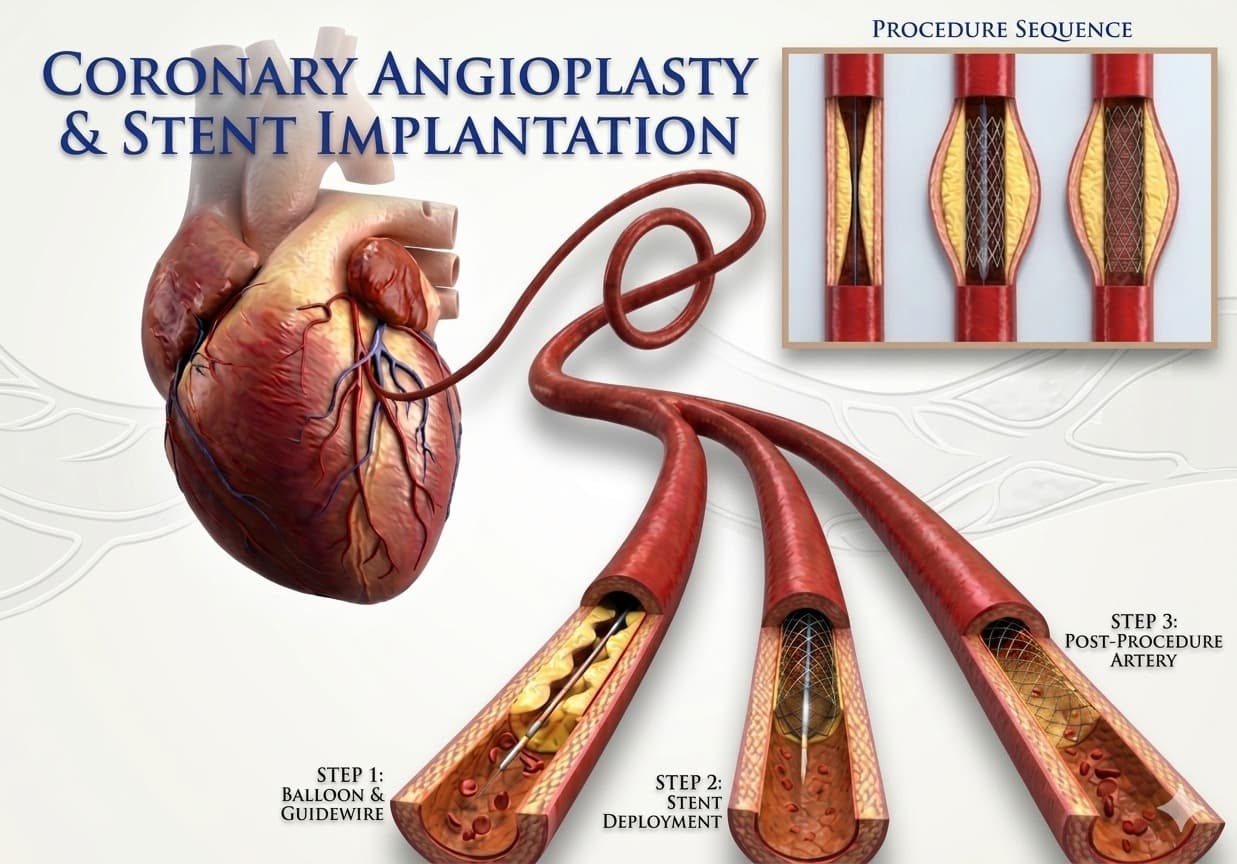
What is coronary stenting?
Coronary stenting is a minimally invasive procedure that restores normal blood flow in the heart's arteries. It is used to treat coronary artery disease, which is caused by narrowing or blockage of the coronary arteries. During the procedure, the doctor places a small metal mesh tube — a stent — into the affected part of the artery. The stent expands and holds the vessel open so blood can flow freely to the heart muscle again.
Why heart arteries narrow
The main cause is atherosclerosis, in which deposits called plaques — made of cholesterol, fats and other substances — form on the artery walls. Over time these plaques grow and reduce the diameter of the artery, so the heart muscle receives less oxygen. When blood flow drops significantly, a person may feel chest pain (angina), breathlessness, weakness or tiredness, and a complete blockage can lead to a heart attack.
Why stenting is performed
Stenting is performed to restore normal blood flow in the coronary arteries. The main reasons include:
- significant narrowing of the coronary arteries
- stable or unstable angina
- an acute heart attack
- a high risk of heart attack
It quickly relieves the narrowing, reduces symptoms, and lowers the risk of serious complications.
What a coronary stent is
A coronary stent is a small cylindrical metal mesh that is placed inside the artery and acts as a framework to keep the vessel open. Many modern stents are drug-eluting: they release a medication that helps prevent excessive tissue growth inside the artery and reduces the risk of re-narrowing (restenosis).
Preparing for the procedure
Before stenting, you usually have several tests, which may include an ECG, blood tests, an echocardiogram, and coronary angiography. The doctor may prescribe medicines that lower the risk of blood clots. It is important to tell your doctor about all the medicines you take and any chronic conditions.
How it is performed
The procedure is performed in a specialised X-ray operating room and usually takes from about 30 minutes to 1–2 hours, under local anaesthetic. The doctor makes a small puncture in an artery at the wrist or groin, and a thin catheter is guided to the coronary arteries under X-ray. A balloon with a stent mounted on it is delivered to the narrowed section; the balloon is briefly inflated, expanding the artery and opening the stent. The balloon is then deflated and removed, while the stent stays in place to keep the vessel open.
What you feel during the procedure
You stay awake and can talk with the medical team. Because local anaesthetic is used, pain is usually minimal or absent. You may feel slight pressure in the chest when the balloon is inflated, but this usually lasts only a few seconds. Afterwards the catheter is removed and the puncture site is closed with a device or a pressure bandage.
After the procedure
You usually stay under observation for several hours up to a day, while the team checks your blood pressure, heart rate and overall condition. Most people can get up the next day and gradually return to normal daily activities. The doctor gives recommendations for further treatment and lifestyle.
Recovery
After a stent is placed, patients take medicines that prevent clots from forming inside the stent — usually a combination of antiplatelet medicines. It is also important to keep an eye on cholesterol, blood pressure and blood sugar, and to attend regular check-ups. Gradually, most people return to normal life — including moderate physical activity — and many notice a clear improvement in how they feel.
Lifestyle after stenting
- stop smoking
- follow a balanced diet, with limited fat and salt
- keep a healthy body weight
- do regular, moderate physical activity
- take medicines as recommended by your doctor
Patient memo after stenting
- take the prescribed medicines exactly as directed
- do not stop any medicine without talking to your doctor
- attend regular medical check-ups
- avoid heavy exertion in the first weeks
- monitor blood pressure and cholesterol
- seek medical help immediately if you have chest pain, shortness of breath or worsening symptoms
Following these recommendations helps maintain healthy blood flow in the heart and significantly reduces the risk of further cardiovascular problems.